Finding the right path for your recovery
Finding the right path for your mental health requires balancing medical efficacy with logistical realities like insurance coverage, time commitments, and therapeutic goals. While the clinical objective—relief from suffering—remains the same, the route you take can look quite different depending on the treatment modality you choose.
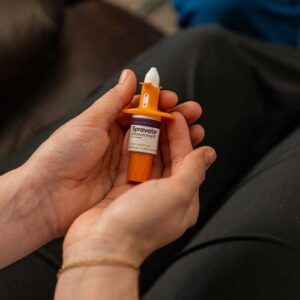
Navigating the landscape of ketamine-based treatments can feel overwhelming, especially when trying to decipher the differences between chemically similar options. It is important to note that IV ketamine is FDA-approved as an anesthetic; its use for psychiatric conditions such as depression and PTSD is considered off-label. Spravato (esketamine), by contrast, is FDA-approved specifically for treatment-resistant depression and major depressive disorder. The choice between IV ketamine (an intravenous infusion of the generic drug) and esketamine (the Food and Drug Administration or FDA-approved nasal spray marketed as Spravato) often confuses individuals seeking care. At Nushama, we believe that an informed member is an empowered one. Rather than viewing one treatment as superior, it is more helpful to view them as different tools suited for different lives and different needs.
Nushama’s treatment-agnostic approach ensures that our clinicians recommend the modality that fits your medical needs rather than filling a quota. Many people living with depression ask “should I try Spravato or ketamine,” and the answer depends as much on lifestyle factors as it does on diagnosis. This framework serves as a tool to help you prepare for a consultation, ensuring you feel empowered to partner with your care team in making the right choice.
The decision matrix: comparing options side-by-side
Spravato and IV ketamine differ primarily in FDA status, administration route, and session duration, requiring you to align medical efficacy with your logistical reality. While both treatments modulate glutamate to support brain health and neuroplasticity—the brain’s ability to reorganize itself by forming new neural connections—they offer distinct experiences and come with specific logistical requirements.
|
Feature
|
Spravato (Esketamine)
|
IV Ketamine
|
|
|---|---|---|---|
|
FDA Status
|
FDA-approved for TRD, MDD with Suicidal Ideation, and as monotherapy for MDD with inadequate response to oral antidepressants (2025)
|
Used off-label for various mental health conditions
|
|
|
Administration
|
Nasal spray (self-administered under supervision)
|
Intravenous infusion (100% bioavailability)
|
|
|
Session Time
|
Minimum 2-hour observation (Safety Protocol)
|
~40-minute infusion, ~90-minute total visit
|
|
|
Insurance
|
Covered by most major plans
|
Private pay (Superbills available)
|
Spravato vs ketamine: which is better?
The “better” option depends entirely on your specific needs: IV ketamine offers 100% bioavailability and deeper experiential processing, while esketamine (Spravato) provides an FDA-approved, insurance-covered pathway. Spravato is FDA-approved for Treatment-Resistant Depression (TRD) and Major Depressive Disorder with Suicidal Ideation, making it the preferred choice for those prioritizing insurance coverage. Because it carries a specific safety protocol known as REMS, members will need to allocate a minimum of two hours for post-dose observation.
IV ketamine, conversely, involves a direct bloodstream infusion used off-label for a broader range of conditions. This method typically follows a standard 40-minute infusion protocol with a shorter recovery period, allowing for a total visit of approximately 90 minutes. Experientially, IV ketamine typically induces a deeper state of dissociation, a temporary disconnection from one’s ordinary reality that can aid in processing trauma, whereas Spravato generally results in milder psychoactive effects. This distinction is crucial; if you are seeking the profound insights often associated with psychedelic therapy, the IV route allows for a more immersive journey, while Spravato offers a grounded experience with less intensity.
5 questions to ask yourself before choosing
Asking these five questions clarifies which treatment aligns with your specific diagnosis, financial resources, schedule availability, desired experiential intensity, and need for speed. Your answers will help our care team recommend the clinical pathway that best supports your healing.
1. What is my specific diagnosis?
Spravato is strictly indicated for adults with Treatment-Resistant Depression (TRD) or Major Depressive Disorder with Suicidal Ideation, meaning your diagnosis must match these specific categories to qualify for treatment. If your primary diagnosis falls outside of these specific categories, Spravato may not be an option due to insurance and prescribing guidelines.
IV ketamine offers broader clinical utility because it is used off-label, allowing clinicians to treat conditions where evidence suggests efficacy. Emerging research, such as the 2025 study “Rapid and sustained reduction of treatment-resistant PTSD symptoms after intravenous ketamine in a real-world, psychedelic paradigm” by Henry A MacConnel 1, Mitch Earleywine 2, and our CMO Steven Radowitz 3, demonstrates the potential of IV therapy for trauma-related conditions. Members managing anxiety or Obsessive-Compulsive Disorder (OCD) may also find the adaptable protocols of IV ketamine therapy better suited to their needs.
2. How will I fund my treatment?
Funding options range from full insurance coverage for Spravato to private-pay investment for IV therapy. Since Spravato is FDA-approved for specific indications, it is recognized by most major medical insurance providers. Most major plans, including Oxford, UnitedHealthcare, and Aetna, cover Spravato treatment, often leaving members with only a standard office copay .
IV ketamine represents an out-of-pocket investment not typically covered by insurance, though Nushama provides superbills to help members seek out-of-network reimbursement. While the upfront cost is higher, many members find the value in the rapid relief and the potentially lower number of total sessions required to achieve remission.
3. What is my schedule availability?
Your schedule determines eligibility as Spravato requires strict 2-hour observation windows, whereas IV ketamine sessions are typically shorter at approximately 90 minutes total. The induction phase for Spravato involves twice-weekly visits for four weeks, totaling eight separate visits in the first month. This cadence can be challenging for those with rigid work schedules or limited childcare coverage.
IV infusions are often more time-efficient per session, which can be a deciding factor for busy professionals seeking ketamine treatment options . An IV session typically lasts about 40 minutes, with a recovery period of 20 to 30 minutes. Furthermore, the induction protocol for IV therapy often involves six infusions over two to three weeks, a timeline that may be easier to fit into a demanding calendar.
4. Am I seeking a “psychedelic” experience?
IV ketamine typically offers profound dissociation, a temporary disconnection from ordinary reality, whereas Spravato generally results in milder psychoactive effects. Some members describe the altered state of consciousness as personally meaningful, finding it helpful for gaining new perspectives and supporting integration (the process of incorporating insights from the session into daily life). However, research suggests that dissociation is not required for ketamine’s antidepressant effects—the neurochemical benefits occur independently of the subjective experience.
Spravato provides a “lighter” experience where you remain closer to ordinary reality while receiving biological benefits. Some members prefer this gentler approach, which offers neurochemical benefits with less intense psychoactive effects as noted in clinical literature . If the idea of losing control or experiencing a strong alteration in consciousness feels destabilizing, Spravato allows for a more grounded treatment session.
5. How quickly do I need relief?
The esketamine vs IV ketamine decision often comes down to urgency, as IV ketamine can provide rapid stabilization in days versus Spravato’s cumulative effect over weeks. When facing acute distress, time is of the essence. IV ketamine acts fast, often bringing relief after just one or two infusions, making it a strong option for acute distress.
Spravato creates a sustainable path to relief but may follow a slightly slower trajectory of cumulative benefit. While some members feel improvement after the first few doses, the full therapeutic effect often builds over the course of the four-week induction phase. For members who are stable enough to wait for this cumulative build, Spravato offers an excellent long-term pathway.
The hybrid approach: combining precision and sustainability
A hybrid approach allows members to start with rapid IV stabilization and transition to insurance-covered maintenance. This model leverages the immediate impact of infusions with the long-term accessibility of nasal spray.
Members often begin with an acute course of IV ketamine to reset the system and achieve physiological stabilization. Once stability is reached, they transition to Spravato to support long-term neuroplasticity. This strategy is uniquely supported at a multi-modality clinic like Nushama, where you can move between treatments seamlessly without changing your care team or medical records.
What we discuss at your consultation
Our consultation focuses on a medical history review, medication analysis, and goal setting to finalize your personalized treatment plan. You do not need to have the final decision made before you walk through our doors.
We view the consultation as a collaborative partnership. A licensed clinician will evaluate your history and current health status—screening for contraindications such as uncontrolled hypertension or active psychosis—to ensure you are medically cleared. The final recommendation will be based on safety and your specific goals, helping you answer “which is right for me” with clinical confidence. For more details on what to expect, read our complete guide to psychedelic therapy .
Common questions
Common questions typically involve logistics like driving, referrals, and transitioning between treatments.
Q: Can I switch from Spravato to IV ketamine later?
A: Yes, we support transitioning between treatments if your needs change or if you plateau with one modality. Our hybrid model facilitates this switch to ensure you receive the most effective care for your current state.
Q: Do I need a referral from my psychiatrist?
A: For Spravato, documentation of past antidepressant trials is typically required for insurance approval. Our team helps navigate these requirements during the intake process to ensure you meet the criteria for Spravato treatment .
Q: Can I drive home after treatment?
A: No, for both Spravato and IV ketamine, you will need to arrange for a trusted friend or service to drive you home. The treatments cause temporary impairment that makes operating a vehicle unsafe immediately following a session.
Q: Is IV ketamine stronger than Spravato?
A: IV ketamine often produces a more intense subjective experience due to 100% bioavailability and precise dosing, which many describe as a “deeper” journey. However, Spravato is still a potent medical treatment; the “strength” you experience depends on your individual sensitivity and the therapeutic dose.
When you are ready to explore your options, we invite you to book a consultation with our care team.